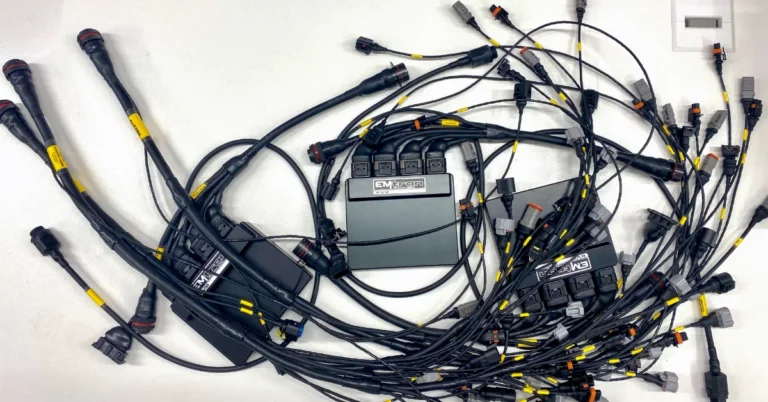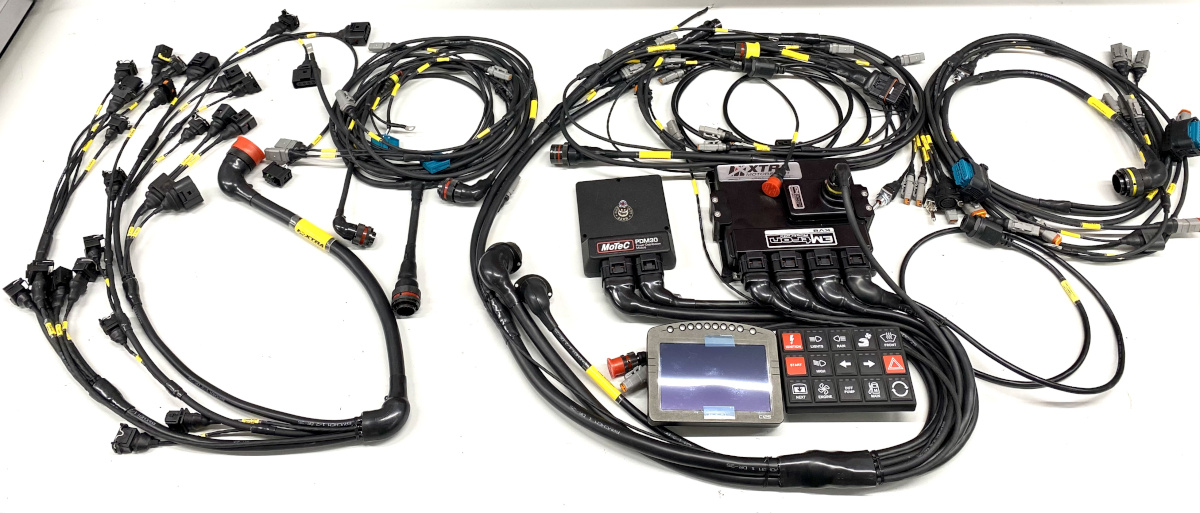
The Best Standalone ECU for the BMW S54

Share:
Share:
By Andrius Kontrimas, Motorsport Engineer — Race Engineer in GT3, LMP3 and 24H Series. Founder of XTRA Motorsport.
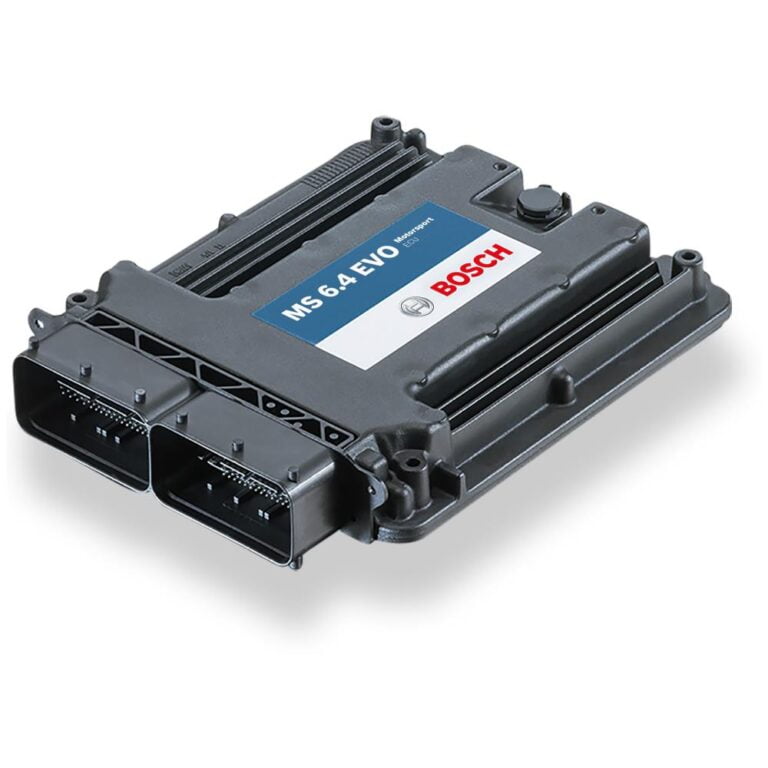
After close to 25 BMW S54 builds — every one on an XTRA Motorsport loom, most of them tuned by me — my short answer to which standalone ECU to run on the S54 is the Emtron KV8. But the honest version of that answer has conditions, because for some S54 builds a MoTeC, a Bosch, or a Cosworth is genuinely the better call. The engine is not the hard part. Choosing the right BMW S54 ECU is about matching the hardware to the build, the regulations, and — more than anything — to the tuner who will calibrate it.
This guide is the S54-specific detail: how to control its double VANOS, how to sense load on individual throttle bodies, what drive-by-wire actually demands, and the motorsport functions that turn a fast engine into a car that wins races. For the general framework — counting I/O, choosing a tuner, CAN protocol, harness cost — read the how to choose a standalone ECU guide first. This picks up where that leaves off.
Three S54 customers walk in the door more often than any others. Here is what I genuinely tell each of them.
The club/track NA car in the OEM E46 M3 chassis, on a budget — Emtron KV8. It has the channels for everything the S54 needs and room left for the gearbox, so you are not buying a CAN expander on day one.
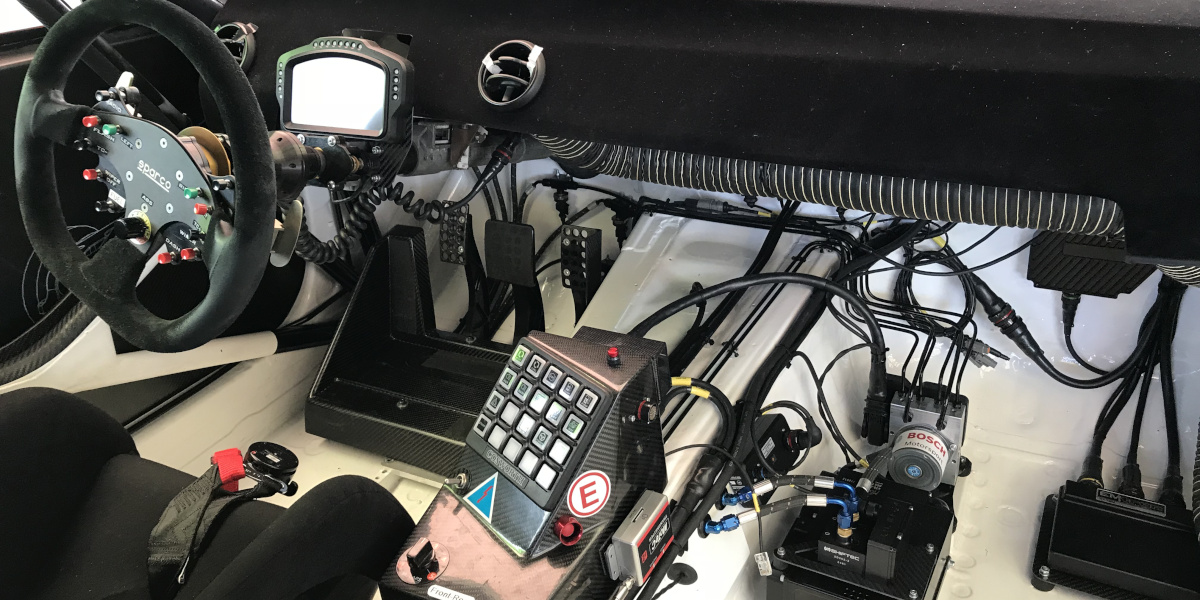
The serious race car (24H Series, Dutch Supercar Challenge level) — DBW, paddle shift, traction control, ABS — Emtron KV8, plus proper datalogging. For data I run a MoTeC C125 dash, or a Bosch Motorsport C70 logger paired with an Ecumaster ADU display. At this level the log is how you find the lap time and protect the engine.
The road-biased car that wants OEM-like driveability and the occasional track day — here you can step down to the Emtron Shadow 8. Same Emtune software, fewer I/O channels, lambda handled by an external Emtron controller. If you do not need the KV8’s channel count, the Shadow 8 saves money without changing how you tune.
The from-the-heart part. There are three situations where I will tell you to buy something else:
I have tuned a lot of S54s on hardware I would no longer build a car around:
Set the badge aside — these are the technical reasons the KV8 is my default for the S54:
See the Emtron range — KV8, KV12 and Shadow 8 — alongside Link and Bosch Motorsport ECUs, with MoTeC supplied to order.
The S54 runs variable cam timing on both camshafts — double VANOS, hydraulically actuated, with cam position feedback. It has a reputation as the scary part of the build. It is not black magic.
Emtron, MoTeC, Cosworth and Bosch will all run S54 double VANOS properly with closed-loop cam-position control. The limiting factor is the tuner’s willingness to read the manual and understand how the system works — nothing more. Where the Emtron pulls ahead on this engine specifically is control resolution: separate PID for the intake and exhaust cam, each in its own 3D table, feed-forward in a 3D table, and custom parameters on the target axis. That is what gets the phasing smooth across the whole rev range instead of hunting at the transitions.
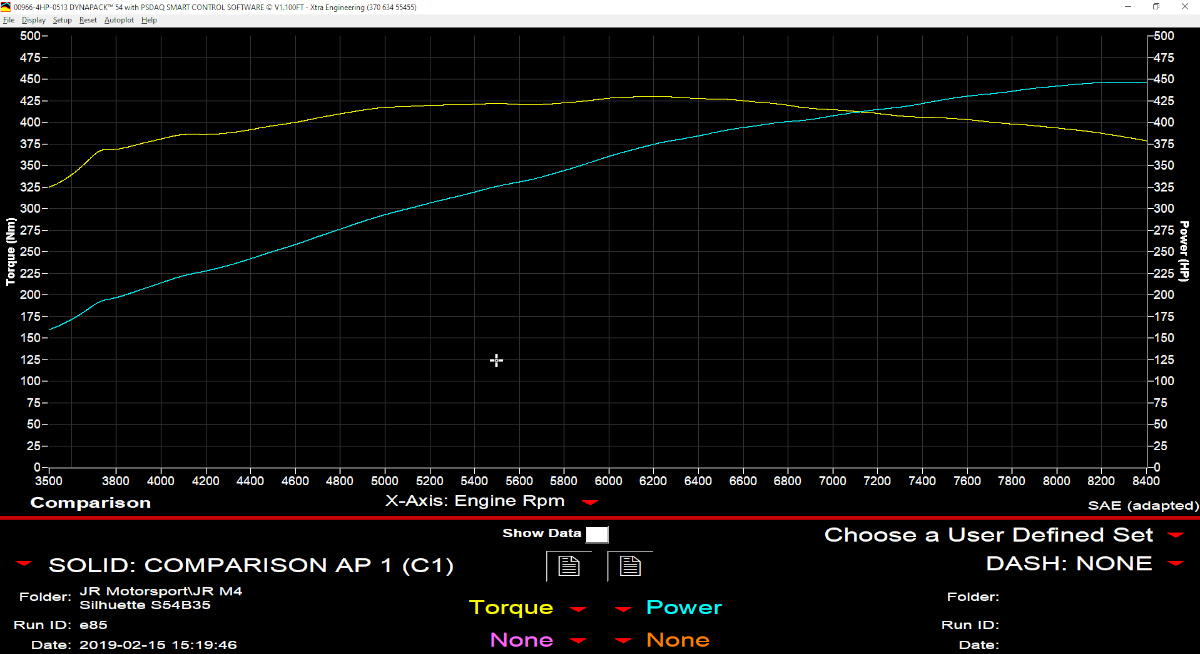
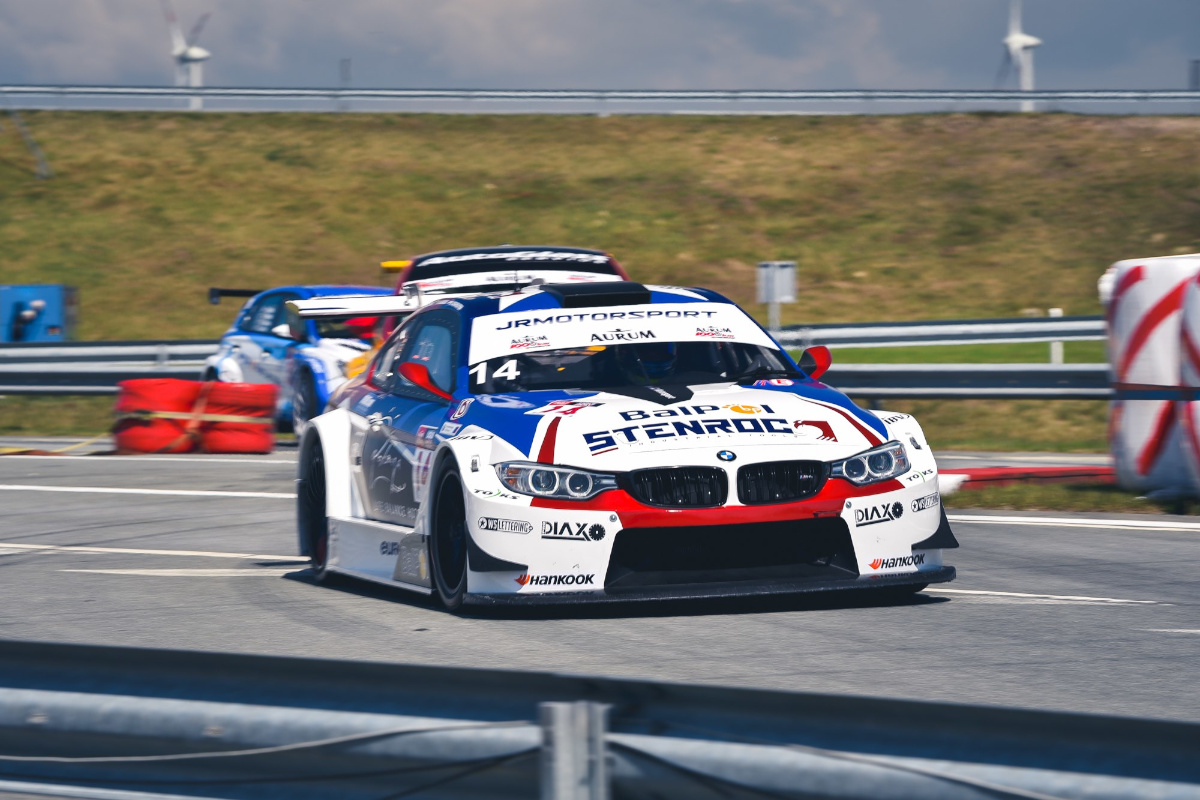
Mapped properly, you keep the torque the engine was designed to make low down — you do not give away the bottom end to gain the top. The plot below is a Dynapack run from a JR Motorsport S54 we built and tuned on an Emtron KV8: full torque carried from low RPM all the way to the limiter, with the VANOS doing its job across the range.
The S54 breathes through six individual throttle bodies, so load is Alpha-N — throttle-angle based. Always back it with a MAP sensor and a dual TPS (TPS1 and TPS2). That combination is non-negotiable on this engine.
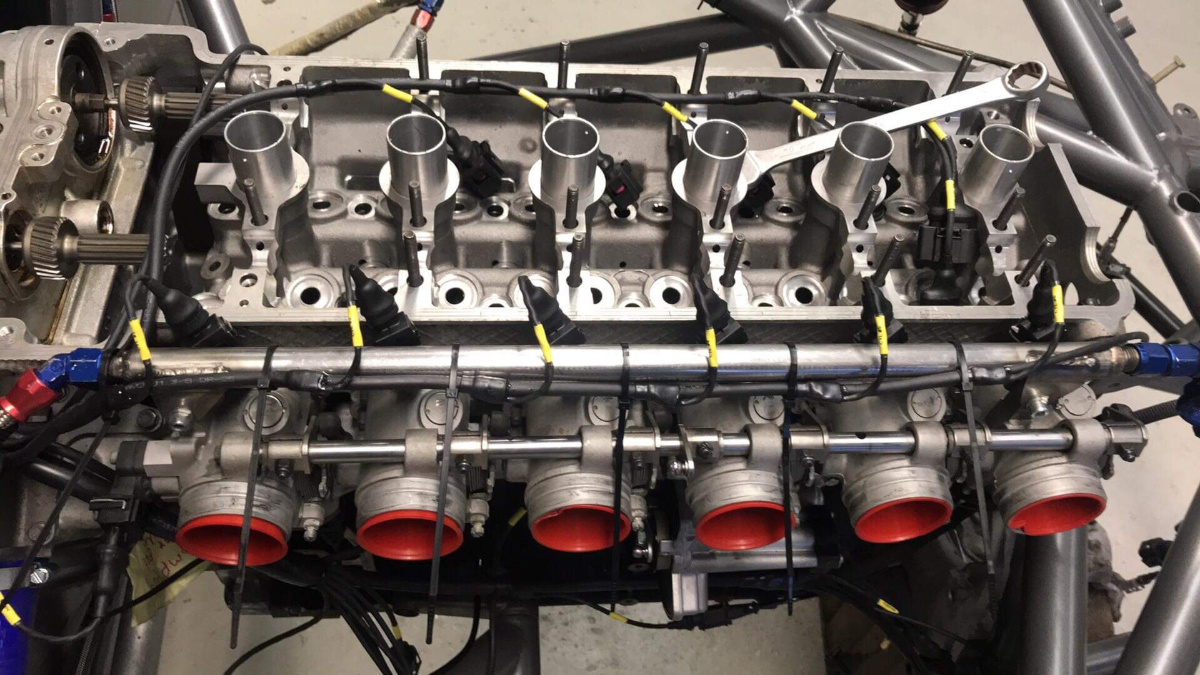
On a race S54 I add one more sensor: a pre-throttle pressure sensor in the airbox, after the air filter. Two reasons. First, you see immediately if pressure drops there under load — a restricted intake or a loading filter shows up in the data before it costs you power. Second, that pre-throttle pressure is exactly the input Emtron’s Throttle Mass Flow (TMF) model needs: TMF works out the actual air mass passing the throttle in grams per second from the pressure drop across the throttle plate and the throttle area. On individual throttle bodies that is a more responsive, more accurate load signal than throttle angle or manifold pressure alone.
On a properly implemented ECU the S54’s crank and cam signals read as cleanly as they do on the factory MSS54 — the Emtron decodes them the same way the OEM does. The platforms that genuinely support the S54 have the trigger decode handled correctly in firmware. This is rarely where a build goes wrong, provided you chose an ECU that actually lists the S54.
The S54 runs coil-on-plug, but its OEM coils are passive — there is no ignitor built into the coil, so the ignition power stage has to come from somewhere. Most standalones — Emtron, MoTeC, Bosch, Link — put out a logic-level ignition signal and expect the coil or an external module to do the switching. Keep the OEM S54 coils on one of these and you need an external ignition module wired between the ECU and the coils. The exception is the Cosworth SQ6 / SQ6M, which has the ignitors built into the ECU and can fire the OEM coils directly.
In practice I do not keep the OEM coils. I convert to the Bosch ‘VAG Red’ coils with a built-in power stage — the same coils BMW Motorsport ran on their own race engines. With the power stage inside each coil, the Emtron drives them directly: no external ignition module, fewer parts in the loom, one less thing to fail. The trade-off is mechanical — the cam cover has to be modified to fit them — but on a proper race build that is worth doing once.
The S54 is drive-by-wire from the factory — a single large throttle motor operating the six individual throttle bodies through the OEM linkage, with heavy return springs and an idle valve alongside it. The Emtron drives that factory motor directly. DBW is still where installs most often go wrong: getting the throttle and idle to sit perfectly is the single hardest part of the calibration on this engine, because of that big motor and those heavy springs.
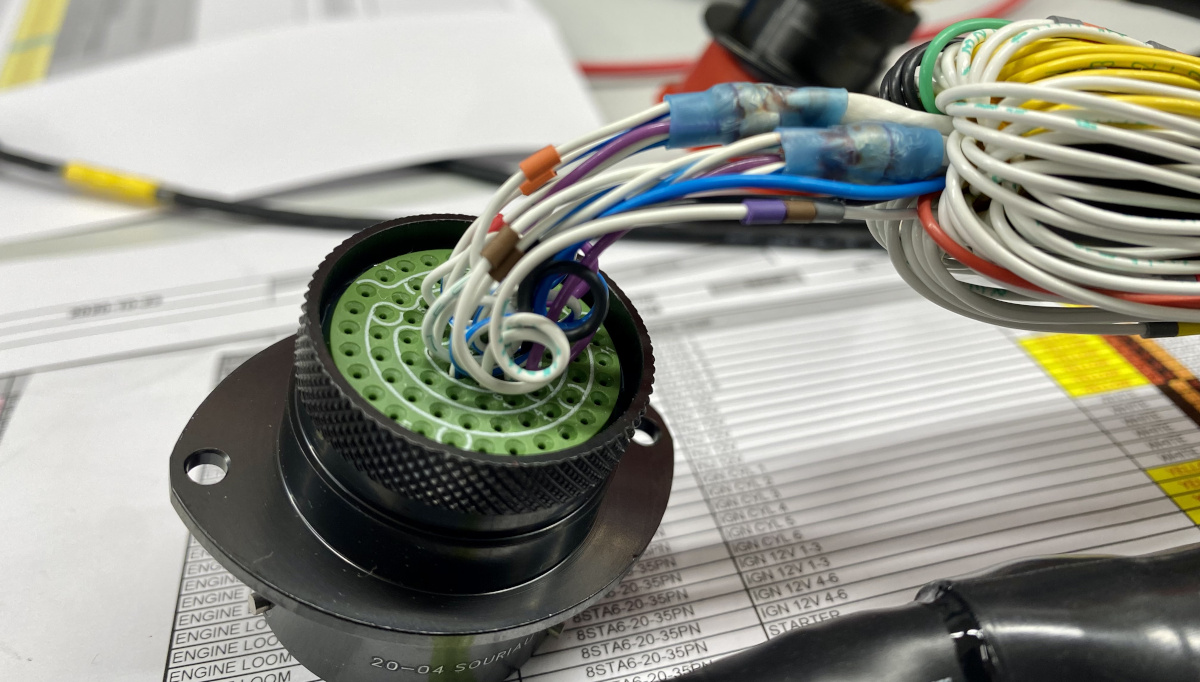
The motor draws real current — especially working against those return springs — so I do not run it on a single conductor. Through the firewall bulkhead disconnect on the engine loom (I use Souriau 8STA connectors — 8STA6-20-35PN / 8STA0-20-35SN) I parallel three 22 AWG pins for DBW Motor+ and three for DBW Motor−, so six contacts share the motor supply. That keeps every contact comfortably within its rating while staying on one pin size across the connector, and the dual TPS feedback gets its own dedicated wiring alongside.
This is where an S54 build stops being about the engine and starts being about the car. Because any input can be put into a 3D table on the Emtron, the only real limit is what the engineer can imagine. A few I have built and am happy to put my name to:
Under Code 60 — or any full-course-yellow — you have to hold the car at 60 km/h, sometimes for half an hour. You do not want to sit on the rev limiter cutting fuel and ignition for that long. Instead I close the DBW and idle valve so the car holds as close to 60 km/h as possible on its own, and only retard or cut fuel on the rare moment it would creep over. And on the S54 you never sit on a long ignition cut — in my experience the valvetrain does not like it, the same way a Nissan SR20 doesn’t. Throttle control, not a sustained cut, is the right tool.
Wet and dry want different slip targets, and a driver mid-stint needs to change it without coming in. The traction control runs from a driver-adjustable slip target with adjustable cut intensity, switchable between wet and dry maps — driven from a CAN keypad on the wheel or dash.
Pit speed limiter, torque-based control to manage traction and protect the driveline, and a calibration that is genuinely smooth and civilised when the car is out of race mode — all built from the same User Function tables. A car that drives properly in the paddock and on the road is not an accident; it is mapped.
On the race cars I integrate Bosch Motorsport ABS — M4 or M5, it does not matter which, both integrate cleanly. With a CAN device that can pass the signals across, you feed the ABS unit’s G-sensor and yaw data to the ECU, and bring brake pressure — front and rear — onto the bus.
That lateral-G and yaw data is where it gets interesting. You put it into a 3D table as an offset: define the car’s usable friction circle, and let the traction control follow it around the circle. Under lateral load mid-corner the allowed wheel slip drops; as the car straightens on exit it opens back up. The slip target tracks the grip the tyre actually has at that moment, instead of obeying one fixed number. And you can still write the hard safety logic the factory DME never could — if brake pressure is over 30 bar and the throttle reads 100%, shut the DBW down. That is the kind of function you simply cannot build on a basic firmware.
For the hardware, see Bosch Motorsport ABS.
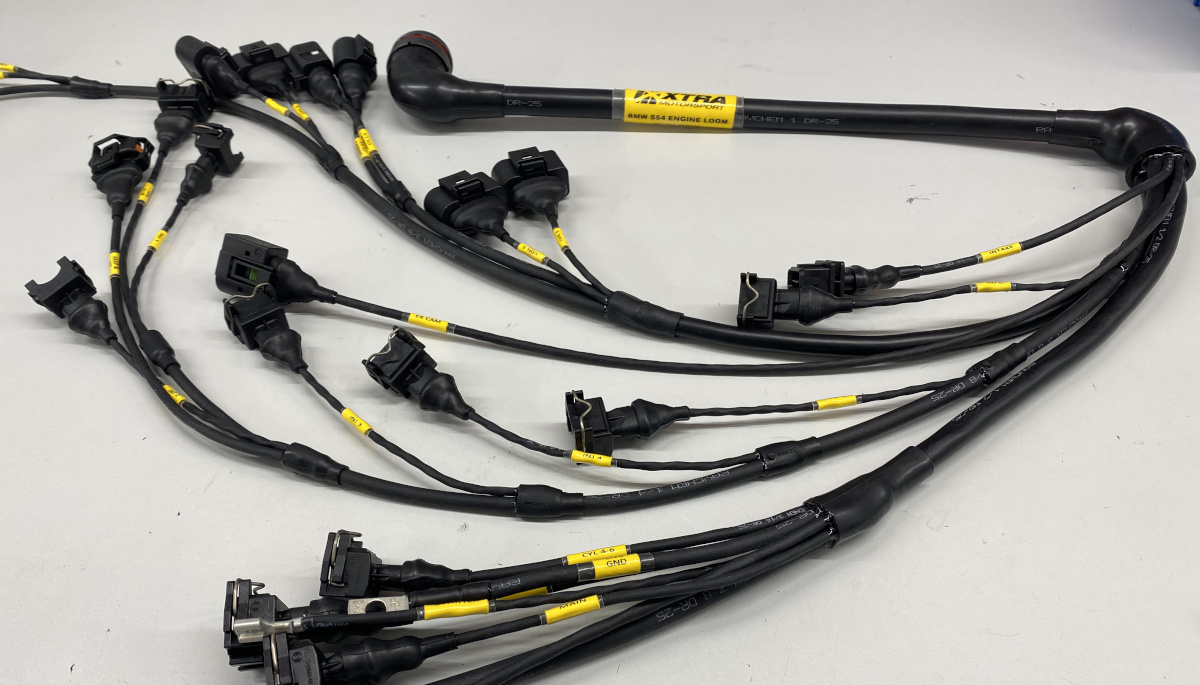
On a proper motorsport S54, the loom costs more than the ECU. Build the harness yourself and the materials alone — M22759/32 Tefzel wire, Deutsch Autosport connectors, Raychem DR-25 sleeving — run roughly 40–50% of the ECU price before you have spent an hour building it.
Tuning is the variable that people underestimate. A wide-open-throttle-only map is cheap. A calibration that also nails cold starts, smooth city driving, traction control, paddle-shift gearbox control, and lasts a full season, is not — and it is the difference between an engine that makes a dyno number and a car that finishes a 24-hour race. Budget the whole system: ECU, harness materials, build labour, and calibration.
For the materials and technique behind the loom, see the full how to build a motorsport wiring loom guide and the motorsport wiring range. Whatever ECU you choose, the loom is where the build is won or lost — and it is the part we do every day.