Motorsport sensors measure the physical parameters an ECU, dash logger, or PDM uses to make control decisions — fuel injection timing, boost control, traction intervention, cooling fan activation, and data acquisition all depend on accurate sensor inputs. The dominant brand in this category is Bosch Motorsport, the motorsport division of Robert Bosch GmbH, which develops and manufactures sensors specifically for racing and performance applications. These are not adapted OEM automotive parts: Bosch Motorsport sensors are engineered with motorsport-specific connectors, extended temperature and vibration ratings, and calibration data compatible with professional ECU software.
XTRA Motorsport offers genuine Bosch Motorsport sensors alongside lambda controllers from Emtron and Link ECU.
Pressure Sensors
Bosch Motorsport pressure sensors use a 0.5–4.5 V ratiometric output compatible with every professional ECU’s analogue inputs. All PST-series sensors integrate a pressure transducer and NTC temperature sensor in a single body with one connector, reducing the fitting count required on an engine.
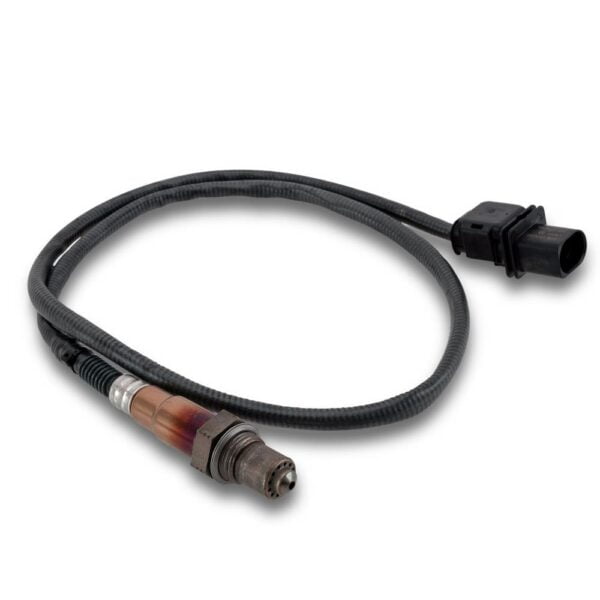
Wideband lambda sensors measure excess air ratio (lambda) across the full operating range of an engine — from rich mixture at lambda 0.65 through stoichiometric (lambda 1.0) to lean cruise at lambda 1.2 and beyond. This data feeds closed-loop fuelling control in the ECU and is essential for fuel map development on a rolling road or racetrack.
Bosch Motorsport Lambda Sensor LSU 4.9, 100 cm — the LSU 4.9 is the industry-standard planar wideband sensor. Measuring range 0.65–2.0 λ. Compatible with all CJ125-based lambda controllers including Emtron ELC1/ELC2 and LinkECU CAN Lambda.
LinkECU CAN Lambda Controller — CAN lambda controller supplied with LSU 4.9 sensor. Transmits lambda over CAN, compatible with Link ECU G4X and G5, and any ECU with a configurable CAN receive channel.
Temperature Sensors
All Bosch Motorsport NTC temperature sensors use the same resistance-vs-temperature characteristic, which is pre-loaded in Emtron, ECUmaster, Bosch Motorsport, AiM, Link ECU, and most other ECU platforms. No custom calibration table is required when using these sensors with a correctly configured ECU.
Bosch Motorsport Temperature Sensor NTC M12-H — M12 thread, extended-reach housing variant. For installations where the standard sensor tip does not reach the fluid being measured.
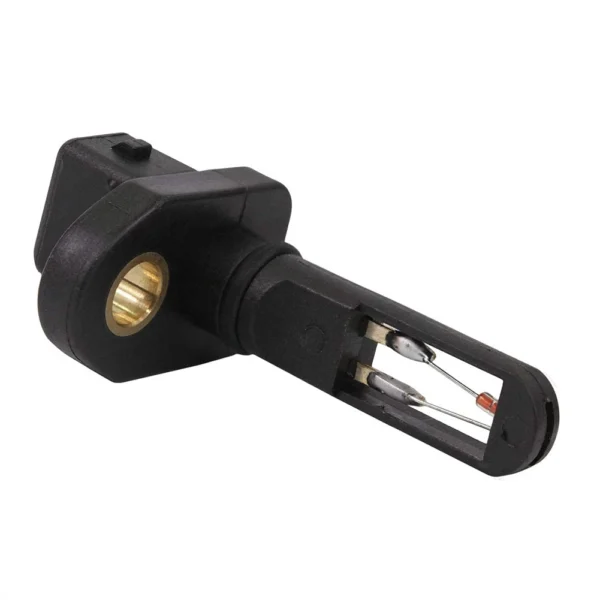
Bosch Air Temperature Sensor Fast Response — fast-response NTC for intake air temperature measurement. Designed for direct airflow exposure in plenum or post-intercooler applications.
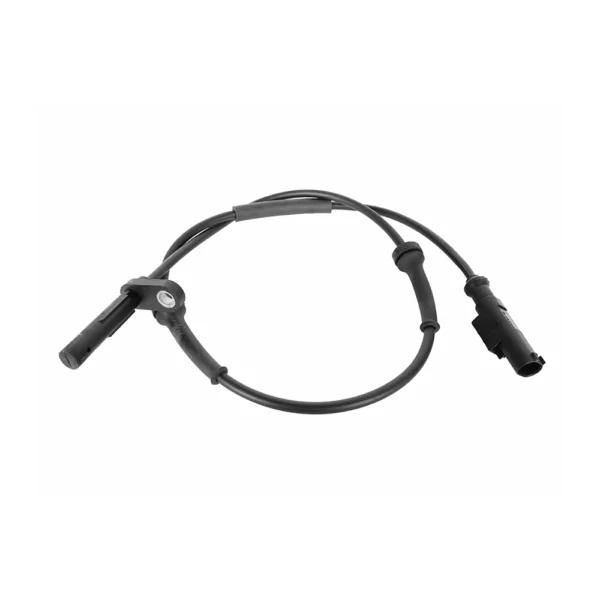
The Bosch Motorsport DF11S is a passive (variable-reluctance) wheel speed sensor. It generates an AC voltage signal as ferrous teeth on a tone wheel pass the sensor tip. No power supply is required — the ECU reads the frequency of the signal directly. Both variants use the same connector and calibration; the difference is physical length to suit different hub and upright geometries.
Exhaust gas temperature sensors use K-type thermocouple wire and require either a thermocouple amplifier input on the ECU, a standalone EGT module, or a CAN EGT controller such as the Emtron ETC4. Inconel-tipped sensors withstand continuous exposure to exhaust gas temperatures above 1000 °C without oxidation.
EGT Sensor K Type 3mm Inconel Tip — 3 mm Inconel-tipped K-type thermocouple, 0–1200 °C. Standard motorsport EGT sensor for per-cylinder or per-bank measurement.
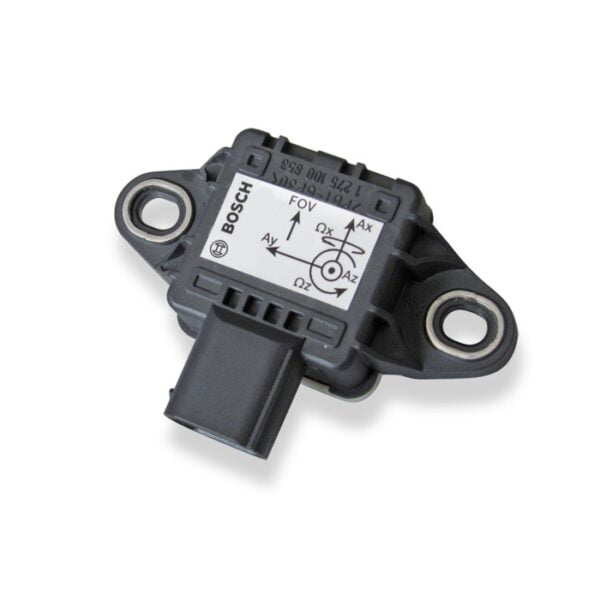
Inertial measurement units combine accelerometers and gyroscopes to measure vehicle motion in multiple axes. ECUs and data systems use IMU data for traction control, yaw correction, active suspension, and post-session dynamics analysis.
Bosch Motorsport MM5.10 Acceleration Sensor — 3-axis accelerometer and 3-axis gyroscope. Analogue outputs. Standard fitment in professional circuit and rally cars for traction control and vehicle dynamics logging.
Bosch Motorsport MM7.10 Acceleration Sensor — higher-specification IMU with improved resolution and dynamic range. For high-speed endurance and factory-programme vehicles requiring maximum IMU accuracy.
Additional Sensors
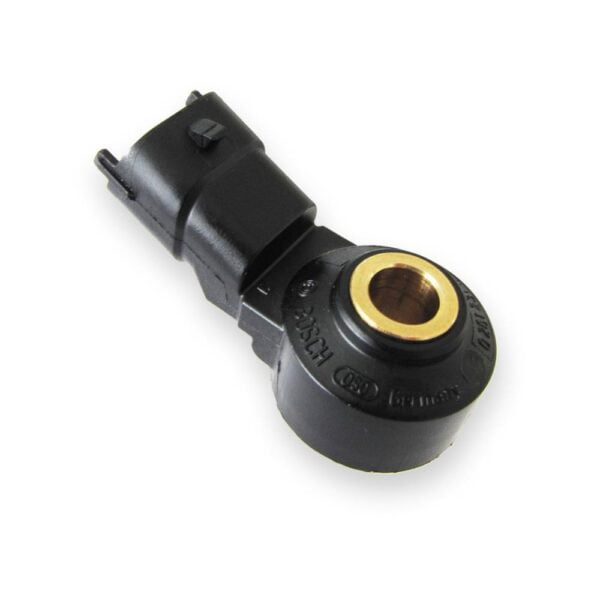
Bosch Motorsport Knock Sensor KS4-R — broadband piezoelectric knock sensor. Threaded body, M8 bolt mount. Used with an ECU knock detection algorithm to detect and respond to detonation events in real time.
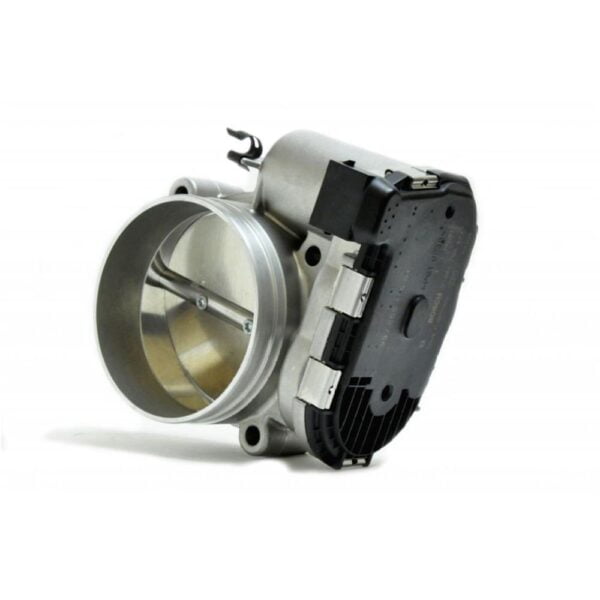
Bosch Motorsport DBW 82mm Throttle Body — drive-by-wire throttle body, 82 mm bore. Includes integrated throttle position sensor (TPS) and stepper motor. Requires DBW driver output in the ECU.
Are Bosch Motorsport sensors the same as Bosch OEM automotive sensors?
No. Bosch Motorsport is the dedicated motorsport division of Robert Bosch GmbH. Its sensors are developed and validated specifically for racing applications — they use motorsport-grade connectors, extended temperature ratings, and vibration tolerances beyond automotive OEM requirements. Calibration data is provided for professional ECU software. They are not re-badged production sensors.
What pressure sensor range should I choose for a turbocharged engine?
Choose based on the maximum boost pressure plus atmospheric reference. For boost up to approximately 1.8 bar absolute (0.8 bar gauge), the PST 3 (0.2–3 bar) is the correct choice. For higher-boost applications above 1.5 bar gauge, use the PST 4 (0.4–4 bar). The PST 1 is for naturally aspirated MAP measurement only — it will saturate on any boosted application above atmospheric pressure.
Which lambda sensor do I need — LSU 4.9 or LSU 4.2?
The LSU 4.9 is the current standard and is specified by all modern lambda controllers including the Emtron ELC1/ELC2 and LinkECU CAN Lambda. Use LSU 4.2 only if your existing lambda controller is specifically designed for LSU 4.2 and does not support LSU 4.9. The two sensors are not interchangeable — the cell impedance and heater characteristics differ, and using the wrong sensor with the wrong controller damages the sensor.
Do the Bosch Motorsport NTC temperature sensors need a custom calibration table in the ECU?
No, for ECUs that have the Bosch Motorsport NTC characteristic pre-loaded (Emtron, ECUmaster, Link ECU, AiM, Bosch Motorsport, and most others). Select the Bosch Motorsport NTC from the sensor library in your ECU software. If your ECU requires a custom table, the resistance-vs-temperature values are published in the Bosch Motorsport sensor datasheets.
Can the DF11S wheel speed sensor work without a power supply?
Yes. The DF11S is a passive variable-reluctance sensor and generates its own signal voltage as teeth on the tone wheel pass the sensor tip. Connect the two signal wires directly to the ECU’s wheel speed input — no 5 V supply or ground connection to the sensor itself is required. Ensure the ECU input is configured for a VR (variable reluctance) signal type, not a Hall-effect type.
What is the difference between the MM5.10 and MM7.10 IMU?
Both are 6-axis IMUs from Bosch Motorsport (3-axis accelerometer + 3-axis gyroscope) with analogue outputs. The MM7.10 offers higher resolution and a wider dynamic range, making it suitable for high-speed professional programmes where precise yaw and lateral acceleration data is critical for active systems and detailed dynamics analysis. The MM5.10 is the correct choice for most circuit and rally applications.
560.00 €–931.25 €Price range: 560.00 € through 931.25 € excl. VATSelect options
This product has multiple variants. The options may be chosen on the product page
465.00 €–881.25 €Price range: 465.00 € through 881.25 € excl. VATSelect options
This product has multiple variants. The options may be chosen on the product page