
How Motorsport ABS Works — Bosch Motorsport ABS M5 Explained

Share:
Share:
By Andrius Kontrimas, Motorsport Engineer — Race Engineer in GT3, LMP3 and 24H Series. Founder of XTRA Motorsport.
Motorsport ABS is anti-lock braking built for a race car instead of a road car. It controls each wheel individually, right at the edge of grip. In practice that lets the driver brake hard and late, then bleed the brakes off smoothly and begin turning into the corner — trail-braking — while the tyres are still loaded, without a wheel locking. Unlike the ABS in a production car, it is configured to the specific vehicle: tyre circumference, wheelbase, track width, and vehicle and wheel weights are all entered so the system knows what it is controlling. The reference system in professional motorsport is the Bosch Motorsport ABS M5. This article explains how motorsport ABS works, why a factory ABS unit stops working once a car is modified for racing, and what you configure on a Bosch Motorsport ABS M5.
If you are deciding whether to fit one and which kit to buy, the product detail lives on the Bosch Motorsport ABS category page. This article is about the engineering — what the system does and why.
A motorsport ABS unit is a standalone, configurable anti-lock braking system designed to be installed in a race car and tuned to that car. It is not the ABS module from a road car, and it is not interchangeable with one. The hardware is sealed and vibration-rated, it is wired into a motorsport harness rather than plugged into a factory loom, and the control logic is open to the engineer through software rather than locked by the manufacturer.
The distinction matters because the two systems are tuned for different goals. Production ABS is a safety system first: it is calibrated once, at the factory, to keep an untrained driver in control in an emergency stop. And here is the big hint as to why it leaves performance on the table — the same calibration has to keep the car safe on summer tyres and winter tyres, worn or new, lightly loaded or full of passengers and luggage. The manufacturer cannot tune for the grip of one specific tyre, so it tunes conservatively for the worst case across all of them. That is a job done for safety, not for tyre performance. Motorsport ABS is a performance system: it is tuned for one known set of motorsport tyres and the much higher deceleration a race car can reach, to produce the shortest stop the car is capable of while keeping it steerable. A production unit is also tuned for one fixed specification that stays roughly the same for the car’s life; a motorsport unit has to work on a car the team keeps changing — tyre compound, brake package, weight, aero — and on surfaces from a dry circuit to a wet, off-camber hillclimb. That flexibility is the whole point.
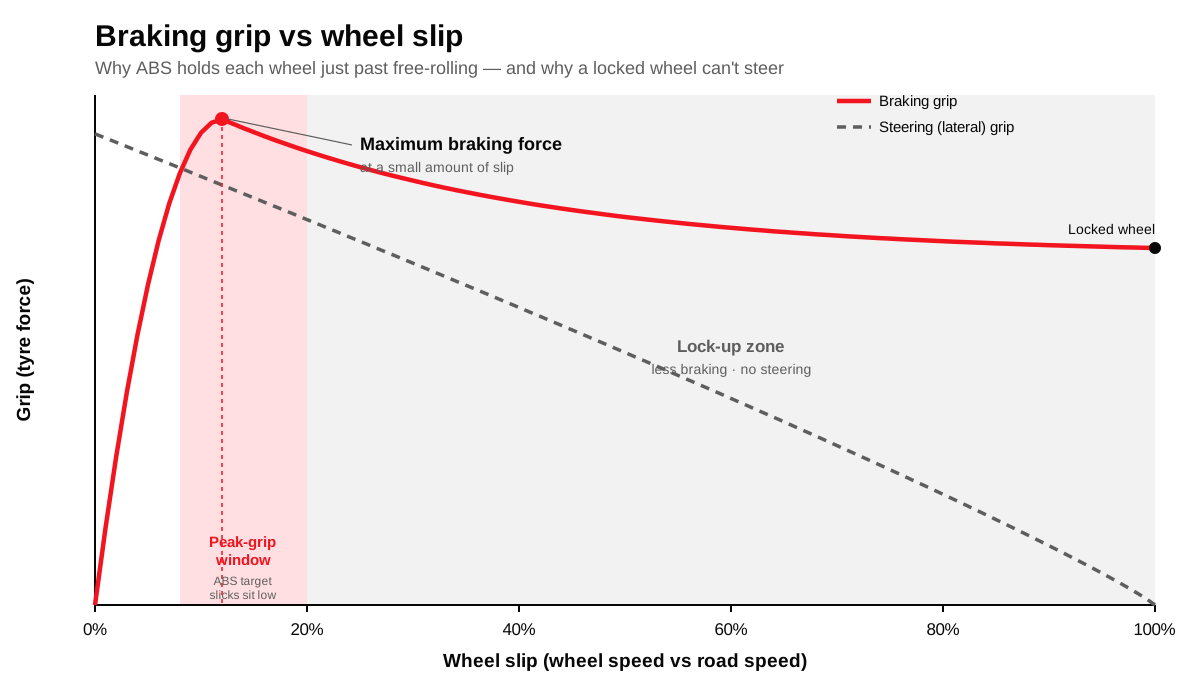
The job of any ABS is to stop a wheel from locking under braking. It does that by watching two things at every wheel: the wheel’s deceleration — how fast its rotational speed is dropping — and its slip, the difference between how fast the wheel is turning and how fast the car is moving over the ground. Deceleration is the early warning: a wheel slowing far faster than the car physically can is about to lock, often before slip has fully built. Slip is the steady-state measure of how hard each tyre is working.
Slip is easiest to picture as a curve:
The grip curve is the key fact: braking force rises with slip up to that peak, then falls away as the tyre starts to skid. A locked tyre is past the peak, on the wrong side of the curve, generating far less braking force than a tyre held at optimum slip. Worse, a skidding tyre also loses its lateral grip — so a locked front wheel cannot steer the car at all.
The ABS hardware does the following, continuously, dozens of times per second:
The unit watches more than wheel speed. It reads two brake pressure sensors — one front, one rear — which let it calculate the brake bias, the front-to-rear split of braking effort. From that data the system can show whether your bias is where it should be and flag when it needs changing. A Bosch Motorsport MM5.10 inertial sensor adds lateral and longitudinal acceleration plus yaw, pitch and roll rates, so the unit knows whether the car is braking in a straight line or trail-braking into a corner — and can adjust how it intervenes accordingly.
The per-wheel control is what a human cannot do. A driver has one brake pedal feeding all four corners, so without ABS they must modulate for the wheel most likely to lock — meaning the other three brake below their potential. ABS gives you, in effect, four independent brake pedals operated faster than any foot.
This is the question that trips most people up, because the road ABS in the donor car often seems fine on the road. The problem appears once the car is modified.
Production ABS software is calibrated to one specific build: a known mass, a known suspension, known tyres, known rotors and master cylinder. When you turn that car into a race car you change nearly all of those inputs:
The factory ABS has no idea any of this happened, and you cannot edit its calibration to tell it. The usual symptom is the unit intervening too early — sensing what it thinks is an impending lock and dumping brake pressure when the modified car had far more grip available. In the worst case it bleeds off a large amount of pressure under maximum braking, which feels alarming and costs you the corner. This is exactly why so many race builders disconnect the standard ABS and live without it — and then drive around the lock-up limit, never using the car’s full braking potential.
A motorsport ABS solves this by exposing the parameters. You tell it what the car now is.
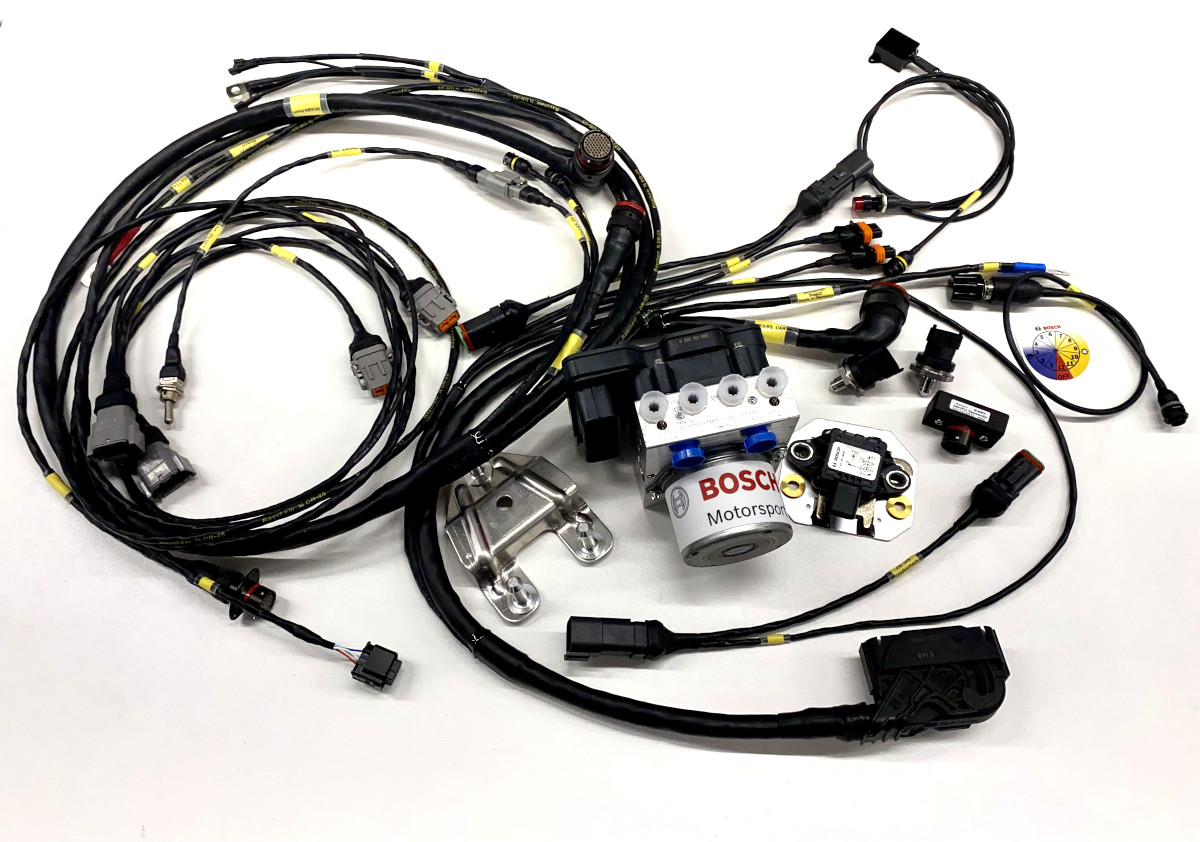
The Bosch Motorsport ABS M5 is the system most professional teams reach for, because every variable that the factory unit hides is open to the engineer. A kit is built around a hydraulic unit with an integrated ECU, two 260 bar brake pressure sensors, a Bosch Motorsport MM5.10 yaw/acceleration sensor, four wheel speed sensors, the 12-position function switch, and the ABS warning light.
The driver gets a rotary switch with twelve positions, each mapped to a different level of ABS intervention. This is the single most useful feature in real conditions:
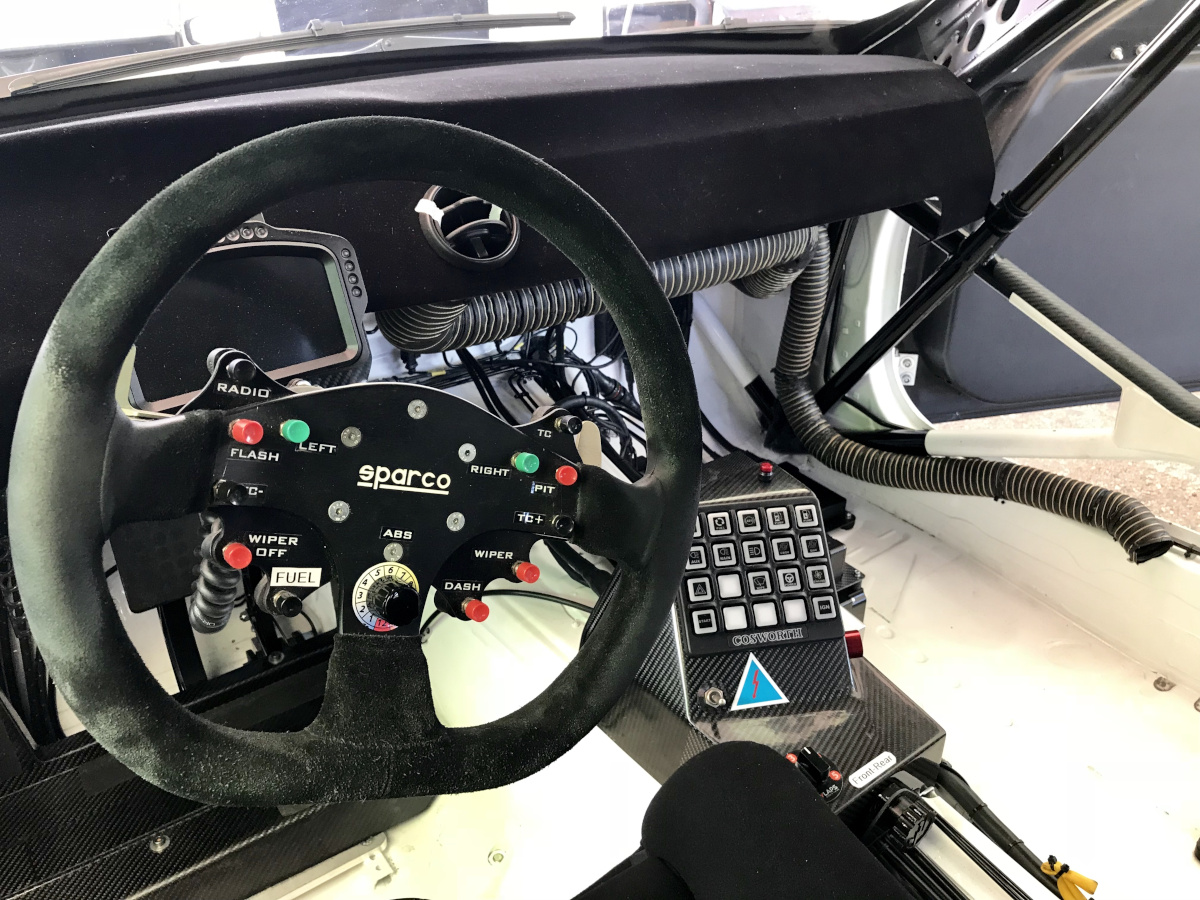
The driver can change position on the fly. Cold tyres into the first lap, a wet patch in a braking zone, an unfamiliar surface on a tarmac rally stage — dial intervention up. Dry track, warm tyres, a corner you know — dial it back down. On the Kit 1 hardware, position 1 can even be configured as a full ABS-off.
Configuration is done in RaceABS, the PC software supplied free by Bosch Motorsport. Connection between laptop and ABS unit is over the Bosch Motorsport MSA-BOX II USB interface. The parameters you set include:
Get these right and the unit’s slip calculation matches the real car. This is the step the factory ABS never lets you perform, and it is the reason a correctly configured M5 works where a road unit cannot. The complete parameter reference and wiring detail are set out in the Bosch Motorsport ABS M5 Clubsport operation manual (PDF).
The M5 ships with four wheel speed sensors — the exact variant (DF11I, DF11S or DF11V) is matched to the vehicle and the chosen CAN bus speed (1 Mbit/s or 500 kbit/s). The system runs either standalone, which suits many older cars, or integrated over CAN with the rest of the car’s electronics. On a modern build it shares data with the Bosch Motorsport ECU and DDU displays: wheel speed, brake pressure and ABS intervention all appear on the bus for logging and display in RaceCon.
For top-level builds, the ABS M5 Kit 1 adds a custom motorsport-spec harness and unlocks advanced algorithms — downforce-dependent slip targets, lateral-deceleration slip adjustment, and corner inside-wheel slip reduction — used in GT3/GT4 manufacture and OEM programmes. For most teams the ABS M5 Clubsport with its preset switch-selectable maps is the right starting point — its full hardware specification is set out in the Bosch Motorsport ABS M5 Clubsport datasheet (PDF). The full variant comparison, including the Porsche Cup kits, is on the Bosch Motorsport ABS category page.
In practice, yes — to almost any car with a hydraulic brake system. Because the M5 can run standalone, it does not depend on the donor car having had ABS in the first place, which is what makes it viable on older and scratch-built cars. What it needs is the hydraulic unit plumbed into the brake circuit, the four wheel speed sensors mounted with a suitable tone ring or increment source at each corner, brake pressure sensing, and the switch and warning light in the cockpit. On later cars it then ties into the existing CAN network; on older cars it works on its own.
The one thing it cannot do is rescue a poor foundation. Motorsport ABS sits on top of the brake system you already have — it cannot compensate for undersized rotors, the wrong pad compound, worn-out tyres, or a driver braking 30 metres too late. What it does is take a properly built car and make its braking repeatable, lap after lap, in conditions that change.
More than almost any other system on the car. The hardest part of braking is the first hit — going from full throttle to maximum pressure in an instant, at the highest speed of the corner, where the car is least settled. That initial application is exactly where a wheel is most likely to lock.
Without ABS, the driver has to hold something back on that first hit and leave a margin, because locking a wheel flat-spots the tyre and throws away the corner. A professional can find the lock threshold and sit a whisker under it, lap after lap. An amateur — reasonably — is afraid of locking, so brakes well below the limit and loses the most time in exactly that initial phase.
ABS removes the fear. The driver can bury the pedal as hard as they physically can at the initial braking point and the system keeps every wheel a fraction short of lock, so the car gives its full deceleration from the first metre. That brings an amateur or gentleman driver’s braking close to a professional’s without years of seat time — it is the single biggest lap-time equaliser motorsport ABS offers.
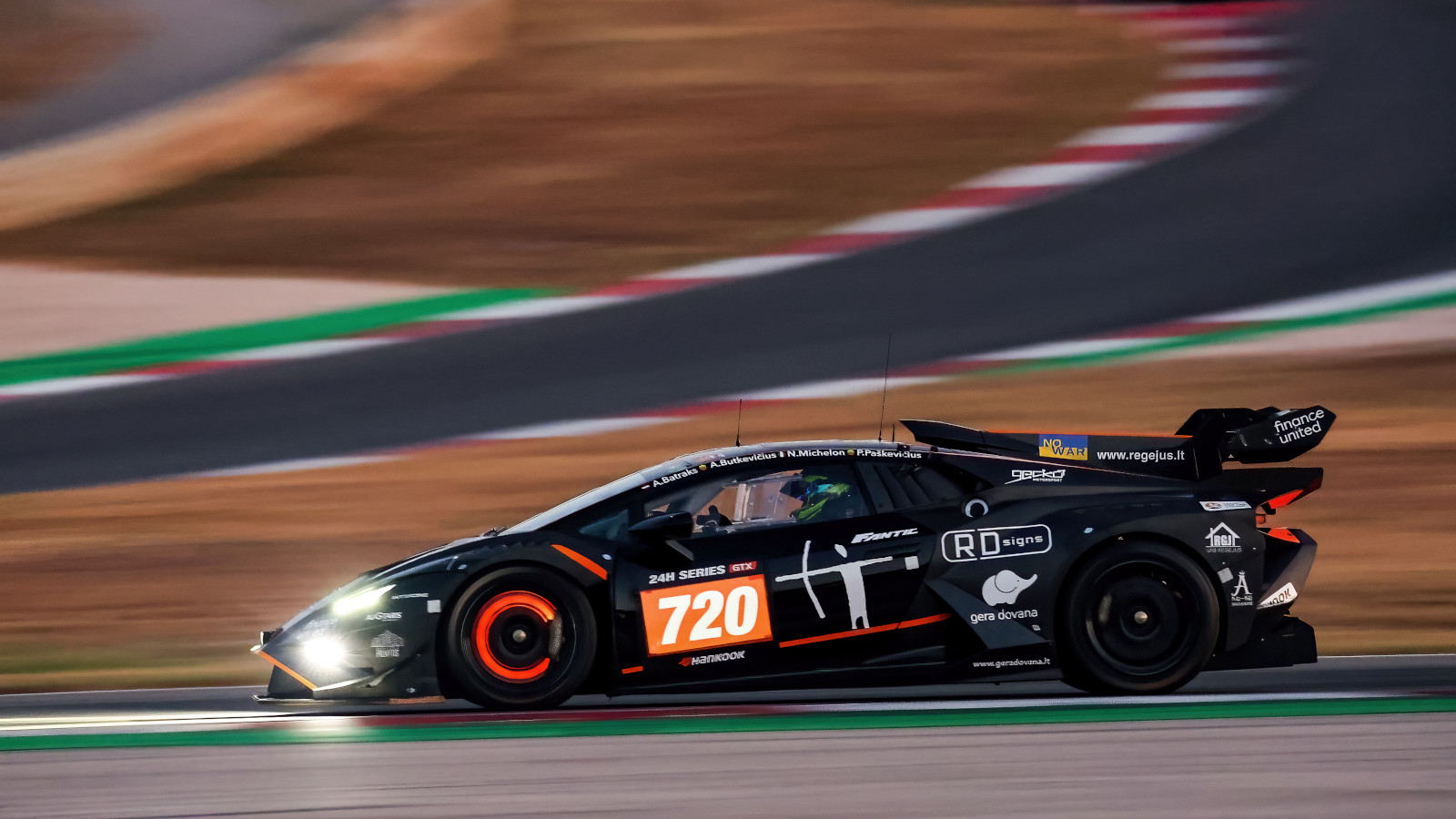
I see this directly on cars like the Lamborghini Huracán Super Trofeo, which runs Bosch Motorsport ABS and is raced largely by gentleman drivers. With the ABS working they commit to the brakes with total confidence and the lap times are there; on the rare occasion the system drops out, the same drivers lose that confidence immediately — they can no longer attack the initial braking — and lap times fall off sharply. The performance was never only in the driver’s foot. The ABS is what lets them use it.
For any car that is allowed to run it under the regulations and is being driven near its limit, the case is straightforward. The gain is not a single heroic stop; it is consistency. The system removes the lock-up that flat-spots tyres and ends races against a wall, and it lets the driver commit to the brakes knowing the car will keep steering if they get it slightly wrong. Over a stint, that is worth more than any one lap. It is also why ABS is now standard equipment across GT3, GT4, Porsche Cup, and the front of the time attack and hillclimb fields wherever the rules permit it.
If that is where your programme is, the next step is matching a kit to your car — covered on the Bosch Motorsport ABS category page. XTRA Motorsport is an authorised Bosch Motorsport dealer and our engineers confirm sensor type, CAN speed and installation requirements with every order.